

“Over the past two years, we have all experienced profound change, and it has reshaped the way we think about residential design. Much of that change has emerged in response to the way we now live. I choose to face the changes of our time directly—to keep doing what I want to do, drawing energy from art, travel, film, and music. Rather than simply waiting, I want to make this period of time as enriching as possible.”
— Tang Chung Han, Design Director
Design Apartment
The pandemic gave renowned designer TANG CHUNG HAN of Design Apartment a rare opportunity to spend an extended period of time in Taiwan. Despite his busy schedule, he joined us for a conversation about his recent thoughts on life and design. An engaging speaker who is always generous in sharing his distinctive perspective, Tang places particular emphasis on enriching one’s inner world—believing that a richer inner life ultimately gives design greater depth, individuality, and character.

Shaped by the Masters of Modernism, Evolving a Language of His Own
Azuma House (Row House in Sumiyoshi) is one of Tadao Ando’s early works. Completed in 1976 in Sumiyoshi, Osaka, the exposed-concrete residence presents an entirely windowless rectangular façade, while its central courtyard is deliberately left open to the sky.
By boldly bringing daylight directly into the heart of the home, Ando created an urban courtyard where residents could experience cool breezes in summer and even snow in winter. The trade-off was equally radical: on rainy days, the occupants had to carry an umbrella simply to move between rooms within their own home.
When Ando received an Architectural Institute of Japan Award for Azuma House in 1979, even the jury expressed admiration for the homeowner, who had respected the architect’s original vision without demanding that the design be altered.
Rewind to the end of the last century. Tang was then a first-year university student studying interior design, discovering Modernism through architects of Ando’s generation.
“Bringing sunlight, air, and water into the home, and using an open courtyard to establish a relationship between people and nature.”
Seeing architectural ideas of this kind translated so uncompromisingly into everyday life made a profound impression on the young designer.
As Tang continued his studies, he encountered the work of many other architects, including Swiss architect Peter Zumthor, known for his atmospheric and enigmatic approach to architecture, and Italian architect and designer Carlo Scarpa, whose work transformed light and shadow into materials in their own right.
These figures inspired Tang to continue looking closely at seminal works of architecture and the work of his contemporaries, constantly refining his own perception of space.
“Again and again, I can still become excited by a work I love. I still have the ability to get goosebumps.”
That sense of excitement continues to propel him forward. Yet for a designer to go further and sustain a meaningful practice over time, he believes passion must be accompanied by deeper critical thinking.
“If you want your work to move people and endure, you have to keep elevating your thinking—to reach something higher and more profound.”

Image / Drawing daylight into the interior | “寧波柴宅”, Design Apartment
What Cannot Be Seen Matters More: An Engaging Spirit Defines the Character of a Space
After two years of living through the pandemic, Tang reflects: “Faced with such enormous change, the pause itself somehow created the possibility of a new beginning.”
With fewer business flights and little opportunity to travel, he found himself with more time for exhibitions and films. Art has always been an important source of aesthetic nourishment for his design practice, and his office is filled with an eclectic collection of contemporary art.
Film, meanwhile, offers perspectives beyond the boundaries of everyday experience. Tang cites the Star Wars series among his favourites, alongside the contrasting homes and lifestyles portrayed in The Holiday, and the conceptual world-building of Dune.
Through continued exposure to different forms of art, he has gradually arrived at one of the ideas he now considers most important in design:
“After all these years of observing and immersing myself in design, I’ve come to realise that what matters most is the character of a space.”
 Image / Interior corridor | “寧波柴宅”, Design Apartment
Much like a person’s temperament, an engaging spirit is made up of countless individual qualities.
If we imagine a house as a person, understanding the space itself and mastering materials, colour, and light are the visible elements of design. But its character belongs to another, less tangible layer.
The impression created by a material does not come from its texture alone. It emerges through the interaction between material and light. Only through that relationship can Tang gradually determine whether the resulting colour, texture, and atmosphere truly correspond to what he is seeking.
“At this stage of my career, when I conceptualise a project, what I care about more than anything is the character of the space.”
Functional completeness is no longer enough; that merely satisfies the practical requirements of design. What matters more is creating a deeper sense of ritual within the space—something that gives everyday experience greater meaning.
 Image / “阿拉伯白” stone | The Silk Court, Design Apartment
Tang used “阿拉伯白” stone as the defining material expression of this model residence on Civic Boulevard, near Breeze Center.
“‘阿拉伯白’ has a warm, substantial quality. Paired with bronze metal, it connects naturally with the fashionable character of the surrounding district.”
When approaching an interior, Tang recommends beginning with the location and context of the building itself. Because this development sits within one of the city’s fashion-oriented districts, the interior could respond directly to that identity.
Artificial light reflected across the stone creates shifting patterns of illumination and shadow. As daylight moves throughout the day, curtains and window frames cast changing silhouettes across the stone walls, transforming them into an ever-evolving composition.
For Tang, fashion is ultimately an expression of confidence—an attitude that generates a particular psychological state. And that state of mind, he believes, can be articulated through the language of design.
Beyond Waiting: Turning a Pause into a New Beginning
 Image / Brick-like stone composition on the television feature wall | “寧波柴宅”, Design Apartment
At “寧波柴宅” in Ningbo, the stone used for the television feature wall was cut in a consistent direction and arranged piece by piece in a brick-like composition.
“Compared with simply installing a full slab of Marble, dividing and composing the stone in a different way allows the entire process to express the designer’s attitude towards both the material and the overall character of the space.”
The arrangement creates visual axes that bring balance and stability to the interior.
“You can sense the designer’s attitude towards the material. This is how texture and material expression are shaped through the designer’s perspective.”
Why does the treatment of stone have such a profound effect on the overall atmosphere?
If the intention is to create something quiet, understated, and contemplative, an antiqued or flamed finish may be appropriate. If the space is intended to feel more technological or fashion-forward, a polished finish or a finely textured matte surface may be considered instead.
This process of thinking through the material—how it is cut, finished, arranged, and experienced—is how a designer gives stone its particular expression. Through one carefully considered step after another, the imagined character of a home gradually takes physical form.
 Image / The meeting point between daylight and the basement interior | “寧波柴宅”, Design Apartment
Before the pandemic, Tang spent much of his time outside Taiwan for work. He readily acknowledges the scale of the change that followed.
“Make this period of time richer.” It sounds almost like a reminder to himself. “Respond to the changes of our time. Keep doing what you want to do. Don’t simply wait.”
Change, after all, often leads us towards unexpected turning points.
Tang sees a parallel in one of the most internationally discussed architectural projects of 2022, the Taipei Performing Arts Center.
“A recognised name has influence. In a certain sense, it can give a city an entirely different way of seeing itself. Once a building becomes identifiable, marked, and noticed—like Toyo Ito’s National Taichung Theater—it can have a significant impact on the city.”
Within the same cultural environment, ways of thinking and approaches to design can gradually become homogeneous. Tang points to France’s embrace of I. M. Pei as an example of a culture possessing the breadth and confidence to accommodate a fundamentally different perspective.
As an international designer himself, Tang welcomes the cultural elevation and creative exchange that such encounters can generate within the design community.
In much the same way, this period of staying still and waiting has prompted him to reconsider the road ahead.
“We shouldn’t keep searching outward. We should be looking inward and asking ourselves the questions.”
Discovering Luxury Stone
Q: How do you approach the selection and use of stone, and what advantages does it offer?
A: Stone immediately conveys a sense of prestige. Within an interior, it is a material capable of expressing a particular kind of value.
Much like leather, stone has long been regarded across both Eastern and Western aesthetic traditions as a premium natural material. Exceptional stone is rare, and that rarity gives it an irreplaceable, one-of-a-kind quality.
When selecting stone, I am constantly looking for a material whose character resonates with the atmosphere of the space and aligns with the overall design concept.
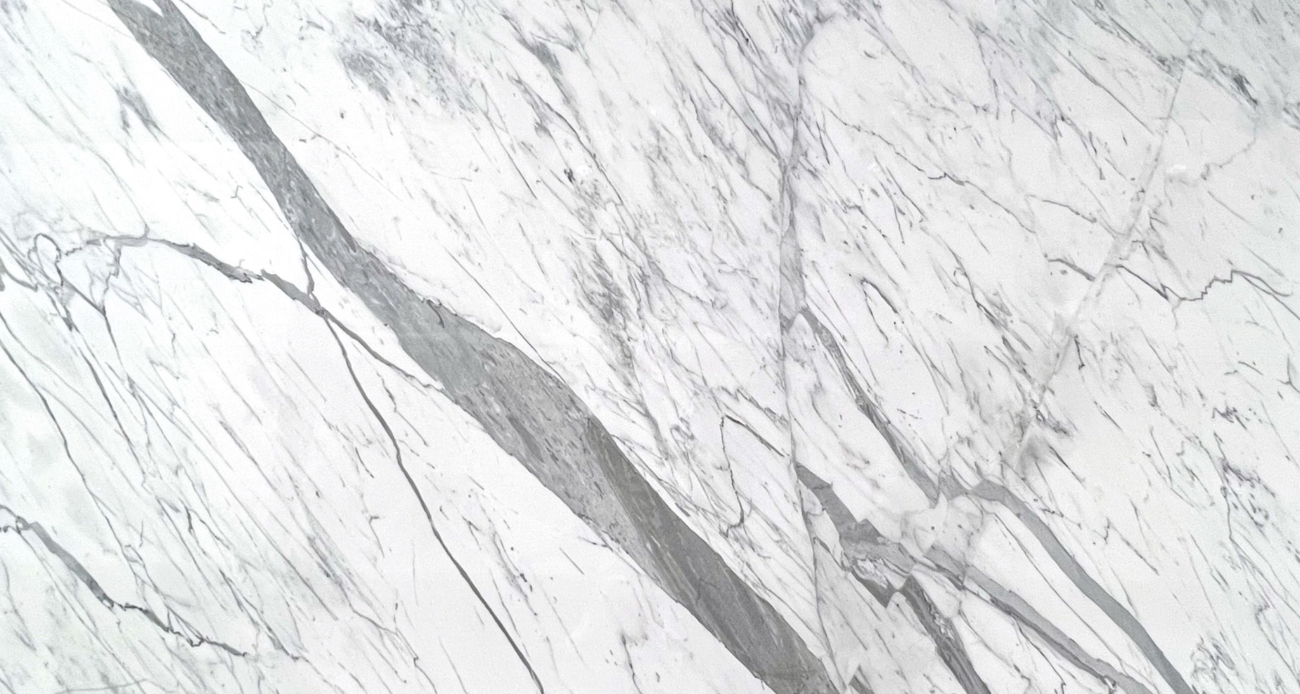
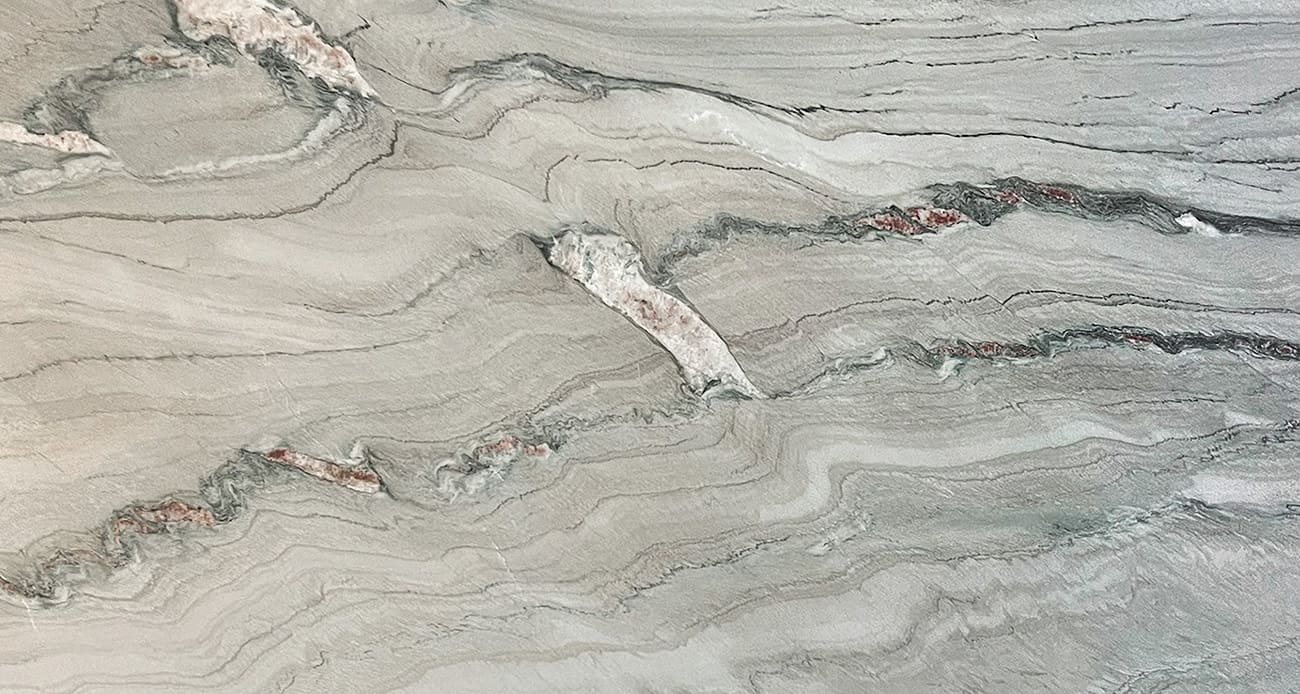
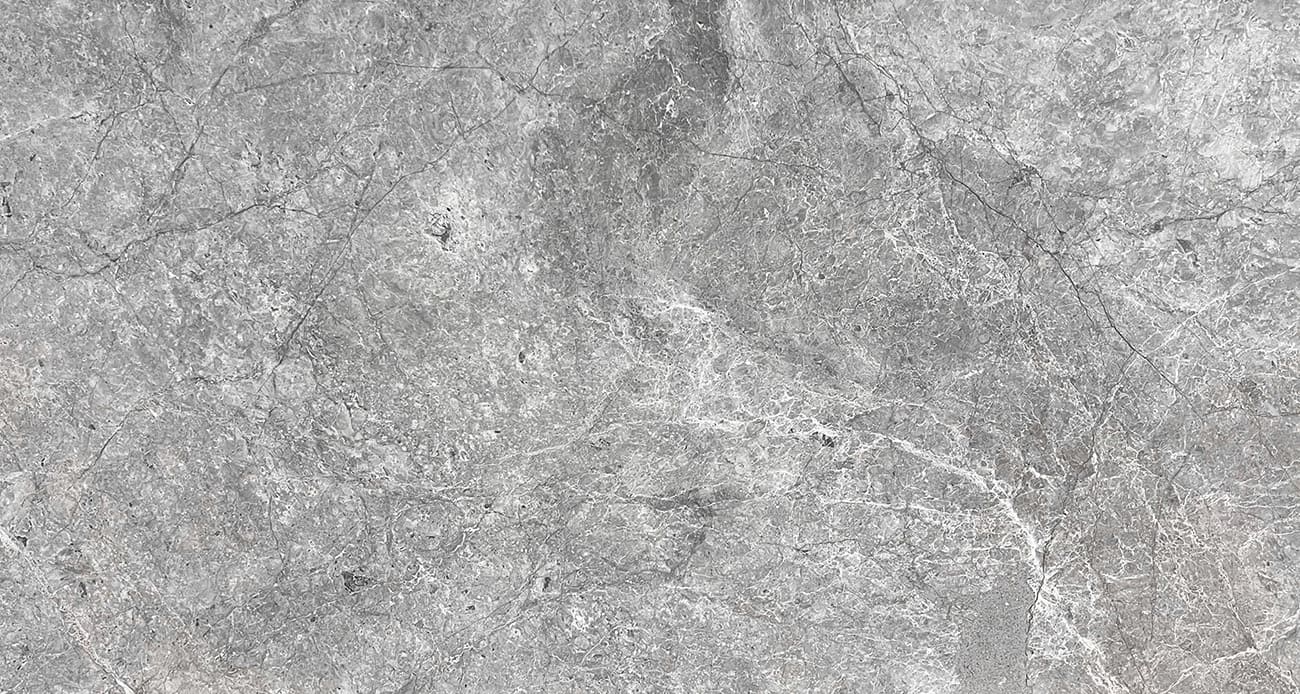
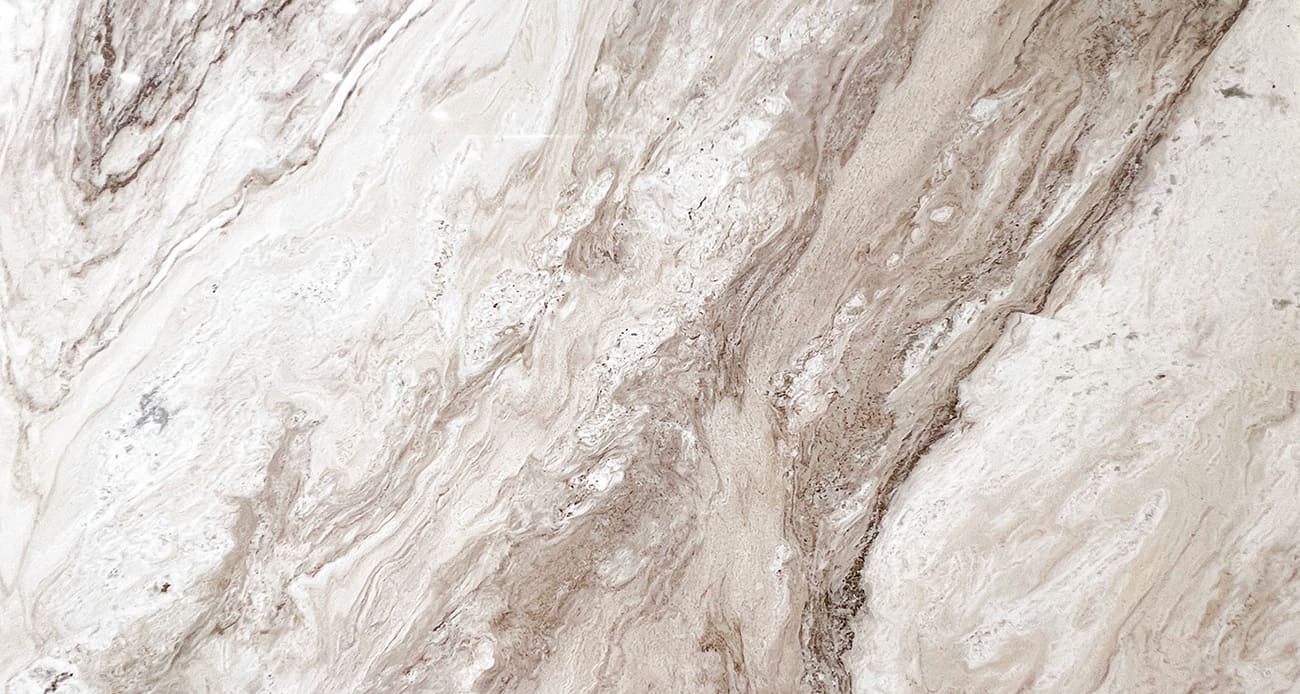
For a space intended to express a strong sense of individuality, I might consider black, white, and grey as the dominant palette. If the intention is to create something warmer and gentler, I tend to gravitate towards beige and grey tones.
 Image / Beige-grey stone wraps the walls and columns | “寧波柴宅”, Design Apartment
Q: How would you describe your impression of CHENHOW MARBLE?
A: CHENHOW MARBLE has established a distinctive business model within the industry through a philosophy that is entirely its own.
Its approach allows stone to connect with luxury, art, and everyday life, creating an innovative path that goes far beyond the conventional stone showroom.
By positioning natural stone as both a luxury material and a work of art, CHENHOW MARBLE has broadened the ways in which consumers and designers can encounter and engage with stone. That is something I have observed about the company for many years.
Through a focused and precise strategy, CHENHOW MARBLE begins with the selection process itself, continually seeking out distinctive materials and creating opportunities for unusual stones to be seen and appreciated.
I usually visit with my clients so that we can explore the materials together. The process itself becomes a way of discovering how they respond to stone—and understanding their own attitude towards material.