


“People are at the heart of every living space; everything else should be designed around them. To create a comfortable home, natural light and ventilation are always the first two things I consider.”
— Wang Tsung-Sheng, Design Director
VJ Interior Design
For Wang Tsung-Sheng, Design Director of VJ Interior Design, a truly comfortable home is one that embraces nature and simplicity through thoughtful interior design. Carefully planned circulation and spatial zoning can create a quiet retreat for moments of solitude while also providing a welcoming setting for lively gatherings with family and friends.
Wang jokingly describes himself as someone who is either on his way to work or on his way home. Spending a great deal of time with his family has given him firsthand insight into the rhythms of everyday life at home, inspiring him to think about how design can make living spaces more convenient and comfortable for homeowners.
On weekends, he enjoys spending time outdoors with his family, reconnecting with nature as a way to relax and recharge. It is this same sense of nature and simplicity that he hopes to bring into the home.
For Wang, the key to achieving this lies in natural light and ventilation. By thoughtfully drawing daylight and fresh air into the interior, a home can gain a sense of openness, movement, and effortless flow.
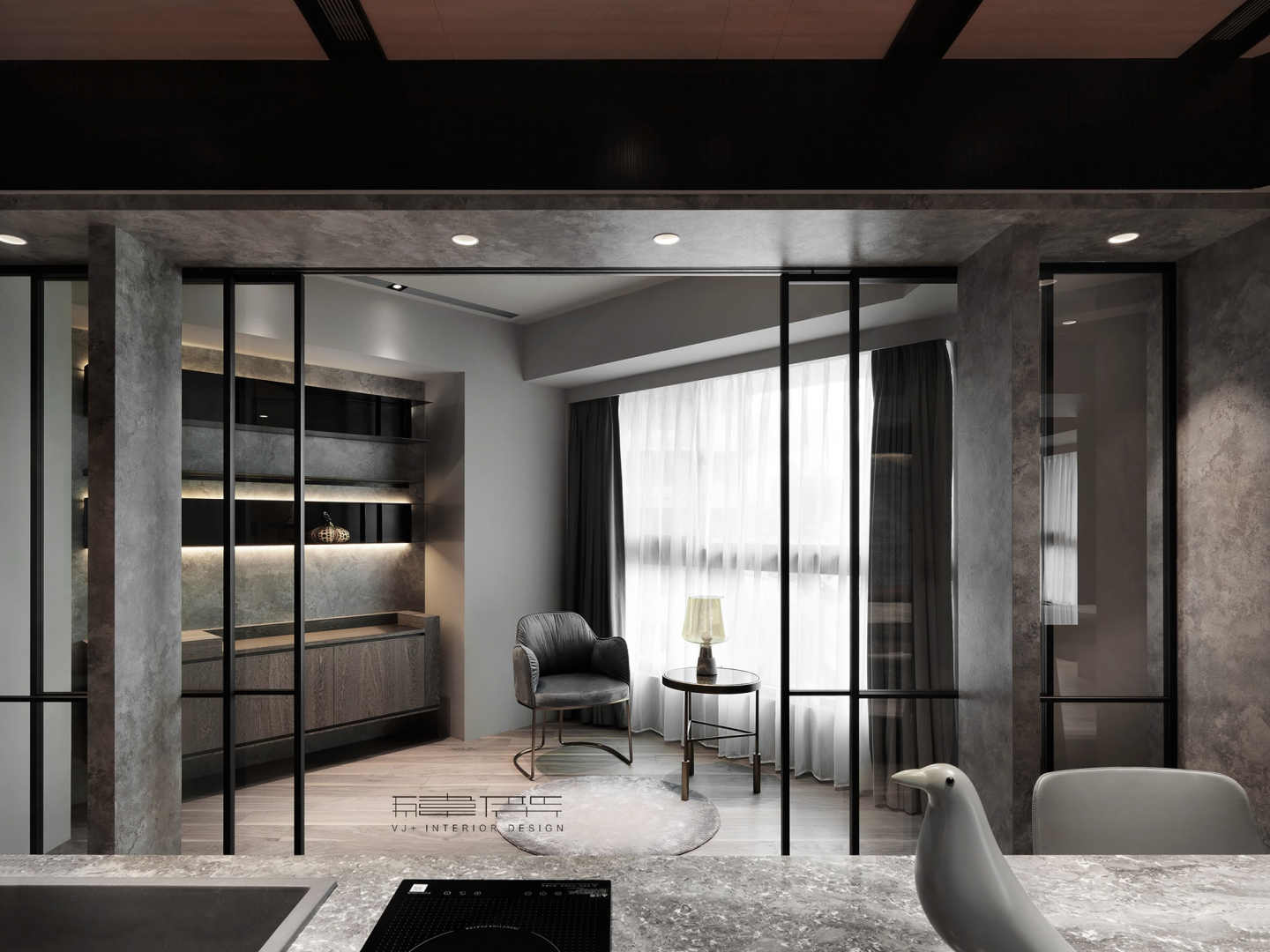 Image / VJ Interior Design uses natural light to create a greater sense of openness and flow.
Loop Circulation: Bringing Natural Light Deeper into the Home
Reading or working beside a sunlit window is something many people naturally gravitate toward. As a result, desks and chairs in a study are often positioned directly against the window. Yet one of Wang’s projects demonstrates a different approach: leaving a deliberate gap between the desk and the window and creating a loop circulation path around the space can actually make the interior feel brighter and more spacious.
Spatial boundaries do not necessarily have to be defined by walls. A loop circulation layout breaks away from rigid divisions and the limitations of a single entry and exit point, allowing people to move more freely between different areas. This creates stronger connections throughout the home while giving each space greater flexibility and the potential to serve multiple functions.
In this particular project, a desk and chair share the living area with the sofa but are separated by a glass partition.
“This allows each area to retain its own identity while still sharing the same natural light,” Wang explains.
In another project, a yoga room beside the living room is divided by glass doors. When opened, the yoga room becomes an extension of the living area; when closed, the transparent doors preserve visual continuity. Either way, daylight and air are able to flow freely through the space.
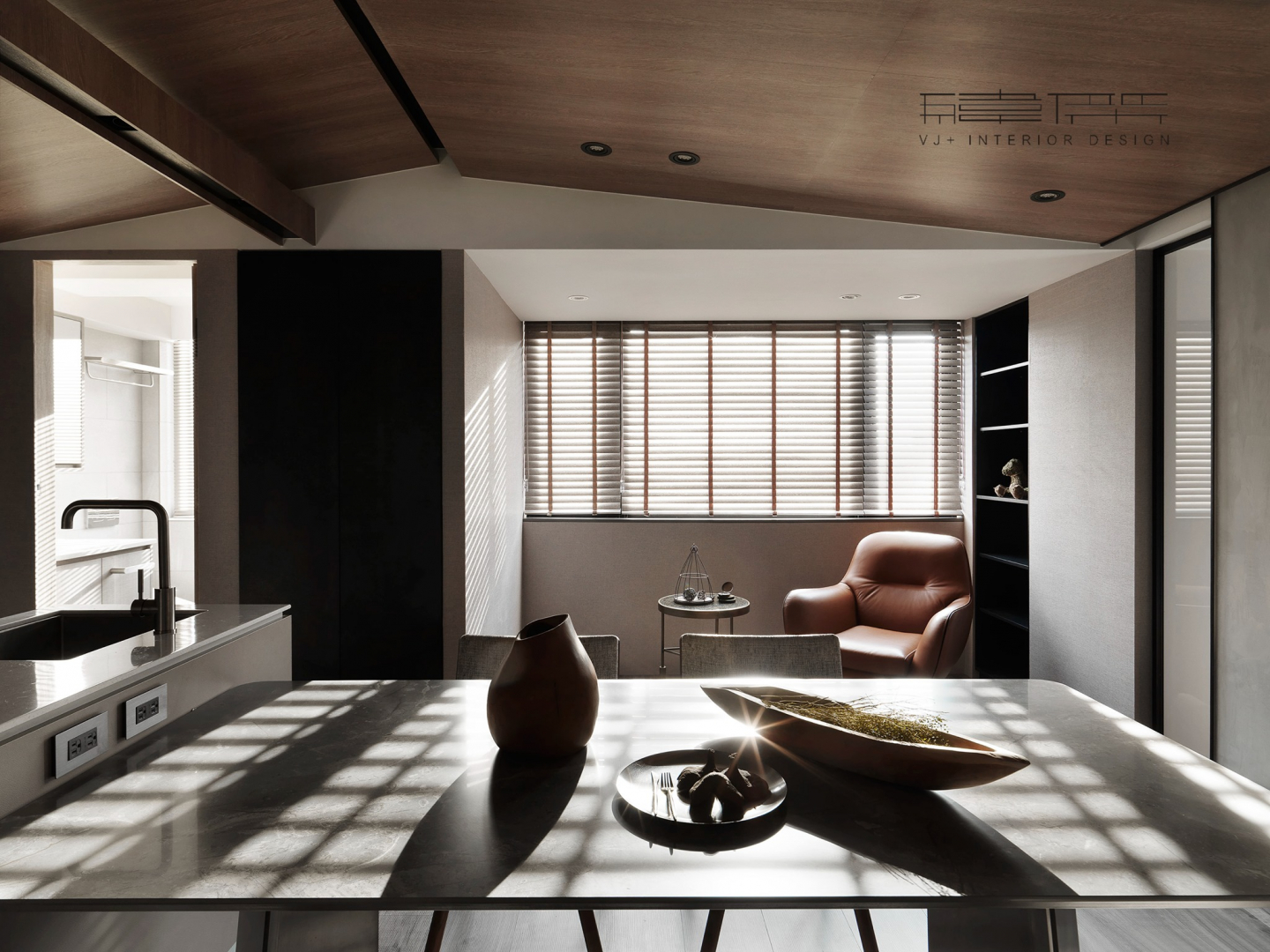
Image / The interplay of clean lines and natural light enhances the organic character of the space.
Neutral Greys and Durable Materials Designed to Stand the Test of Time
When it comes to colour, Wang believes grey best embodies the natural, understated quality he seeks in his interiors. Soft and calming, it creates an atmosphere that allows people to relax and unwind.
“Surprising, isn’t it?” he says.
In his view, white can sometimes feel too pristine and is easily associated with specific aesthetics such as Scandinavian or American-style interiors, while black can feel too heavy. Grey, sitting between the two, offers far greater versatility and can adapt to a wide range of design styles.
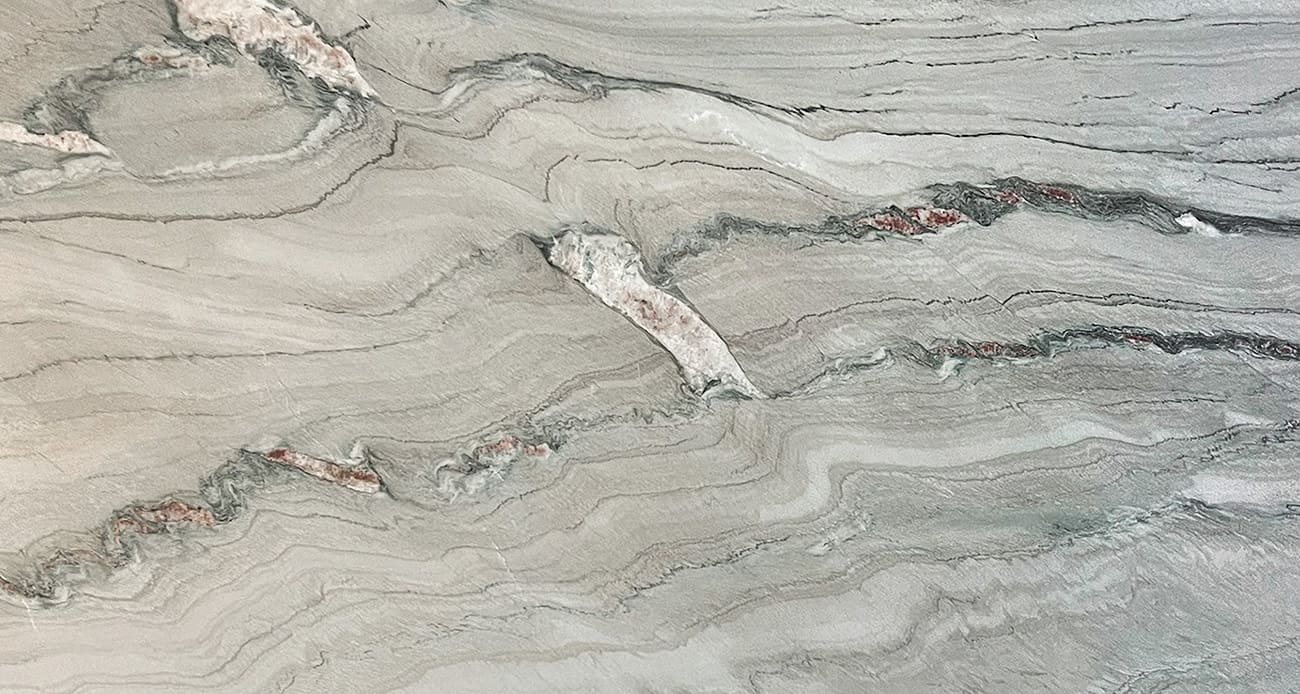
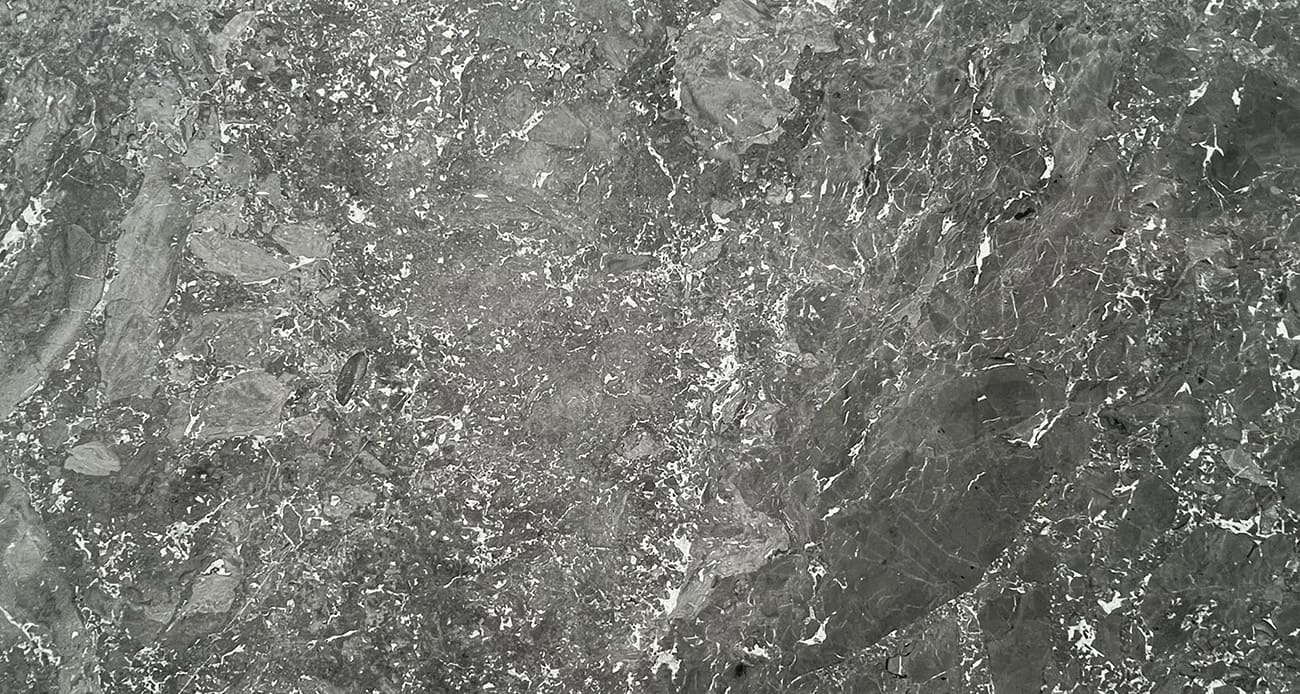
This preference also extends to his choice of stone, where he often gravitates towards a grey palette. One example is Grey Donatello from CHENHOW MARBLE. On closer inspection, its grey surface is interspersed with subtle, crystalline white details.
“The delicate variations give it an elegant quality that remains beautiful over time,” Wang says.
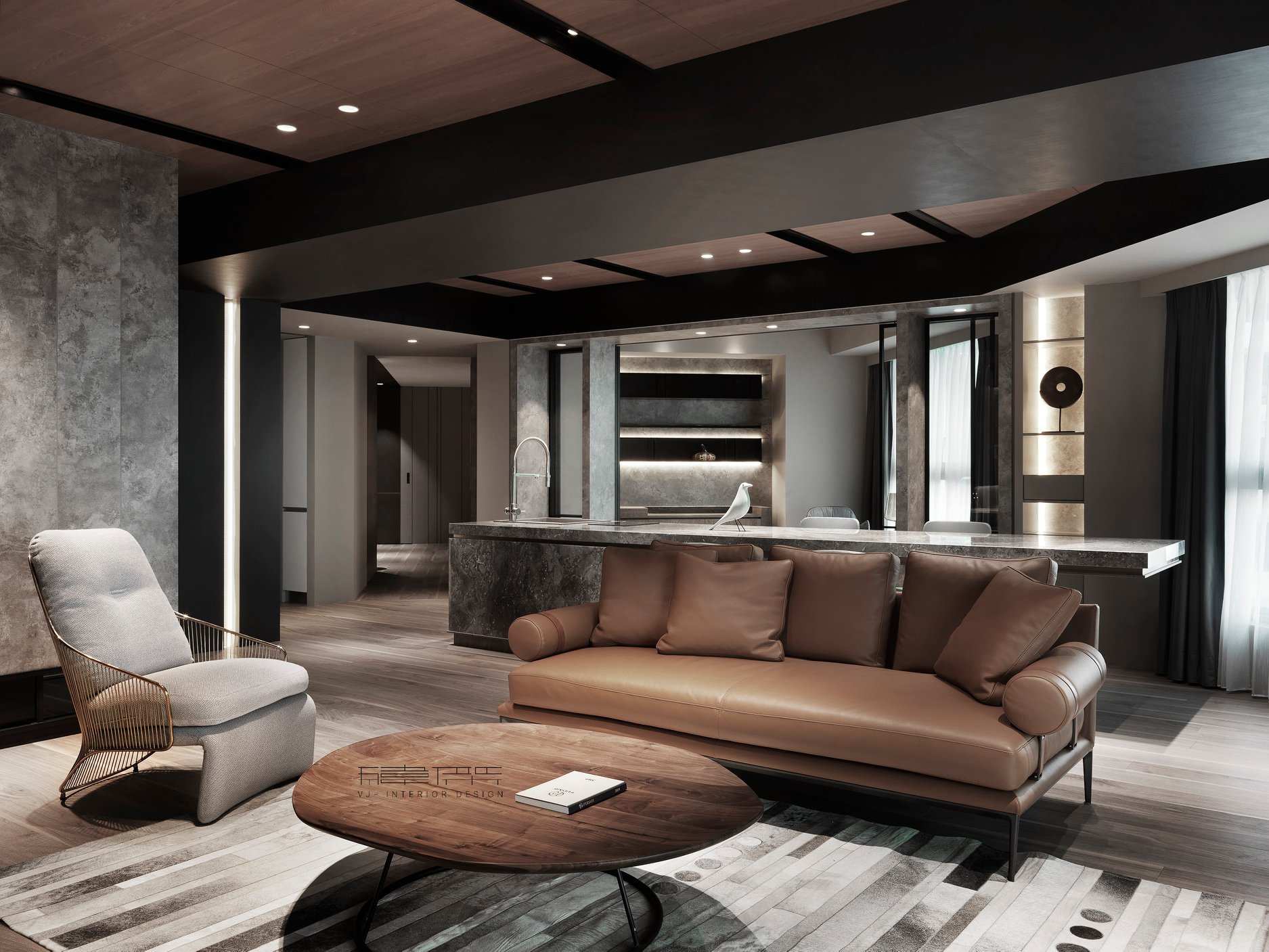 Image / Grey stone is used across the kitchen island and wall surfaces, creating an understated and sophisticated atmosphere.
Beyond its visual appeal, stone is also valued for its practicality and durability. Wang believes a home should be easy to maintain and designed to accompany its occupants for years to come.
Residential interiors have very different priorities from commercial spaces, where materials are often chosen to immediately capture attention. In a home, material selection therefore requires even greater consideration. In addition to natural stone, Wang frequently works with materials such as wood panels, wallcoverings, and decorative laminates, all of which can be highly suitable for residential interiors.
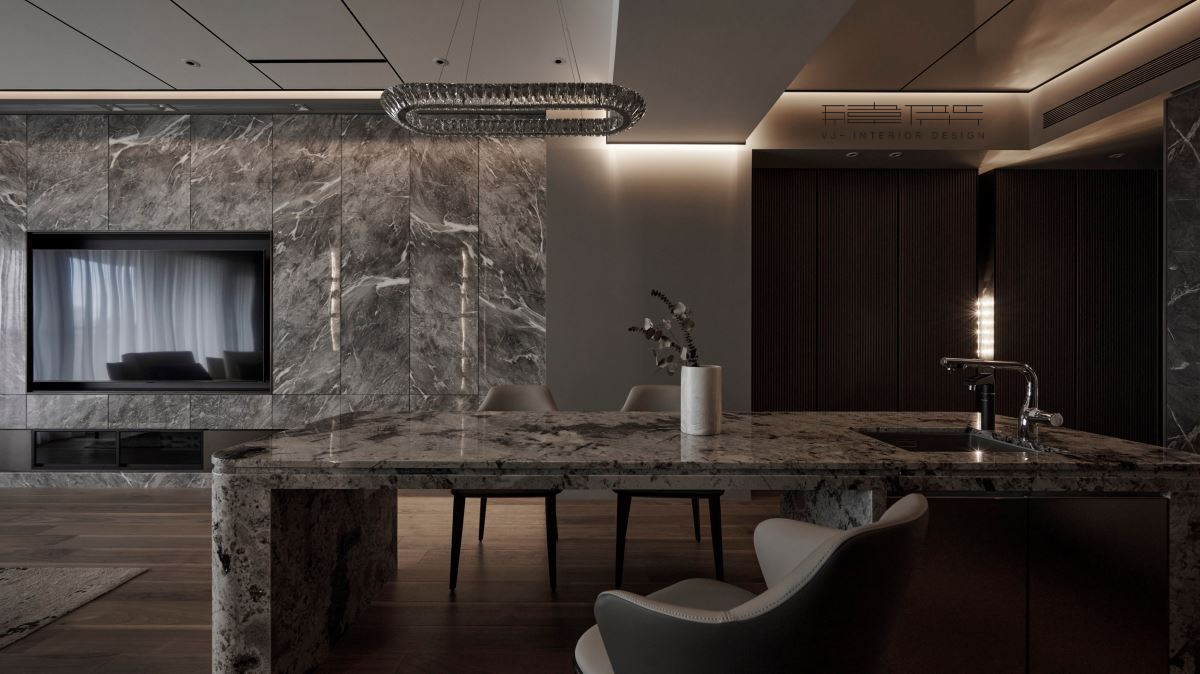
Image / Grey stone defines the television wall, while white-based Granite is used for the kitchen island.
Discovering Luxury Stone
Q: How long have you been working with CHENHOW MARBLE, and what do you see as the company’s strengths?
A: We’ve been working together consistently for quite some time. Whenever I visit the showroom to select stone slabs, I’m always struck by the range of patterns—from subtle and refined to bold and expressive. CHENHOW MARBLE has an exceptional eye for selecting stone. Every slab feels unique, as though it has a story of its own.
 Image / The open, visually connected layout brings an elevated sense of refinement to everyday living.
Q: How do you help clients choose a stone they love while also ensuring that it works well within their home?
A: I like to take the process step by step rather than rushing into a decision. There are so many different stone patterns that looking at too many at once can quickly become overwhelming.
I usually visit the showroom with my clients at least twice. On the first visit, I encourage them to trust their instincts and simply choose the stones they are naturally drawn to. We do the same thing on the second visit. Once we understand their preferences more clearly, we can then use our professional judgement as designers to help narrow down the options and make the final selection.
Q: What happens if a client falls in love with a particular slab, but you feel its pattern doesn’t suit the overall direction of the space? How would you approach that conversation?
A: First of all, personal taste isn’t right or wrong, so I would never dismiss a homeowner’s choice. Instead, I would carefully show them why I think the stone may not work by creating visual simulations. I’ll also replace it with an option that I believe is more suitable so they can compare the difference for themselves.
If the homeowner still prefers their original choice, that’s when the designer’s skill really comes into play. I’ll find a way to make it work—perhaps by pairing it with other materials or adjusting the proportions within the space.
At the end of the day, it’s their home. What matters most is that they enjoy what they see and feel comfortable living there.
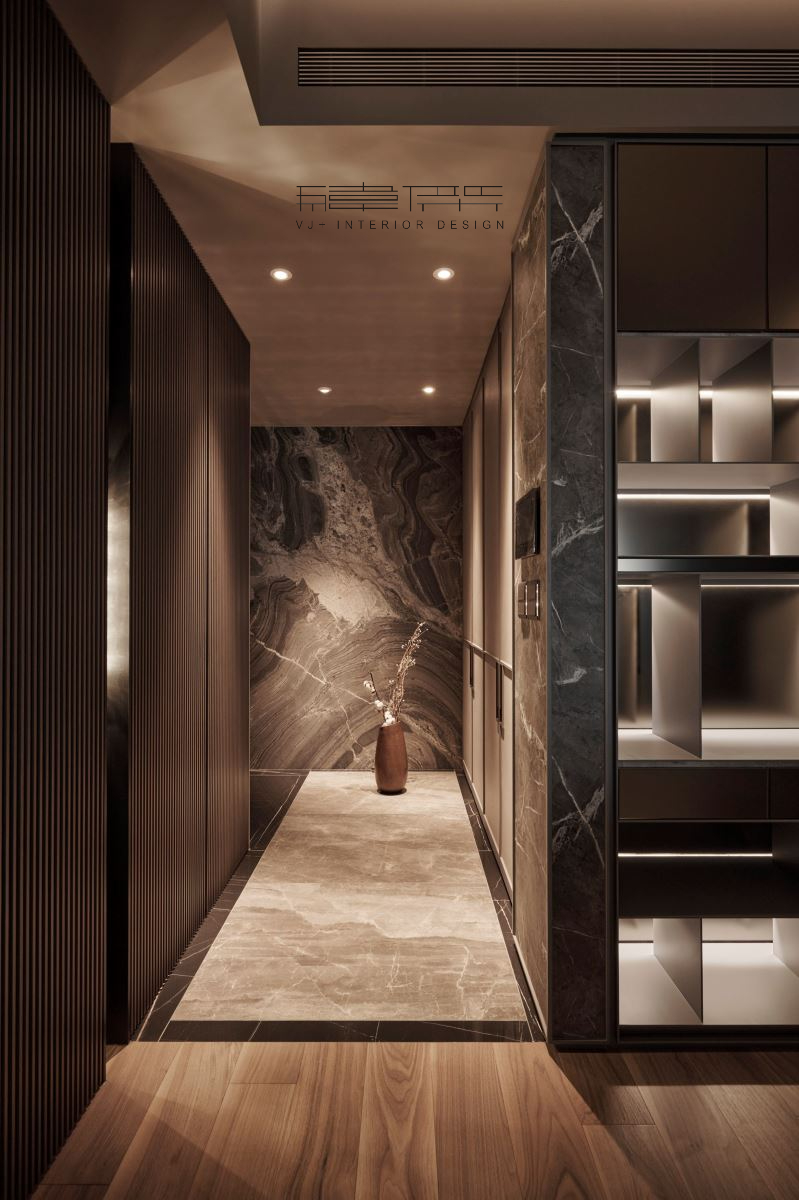
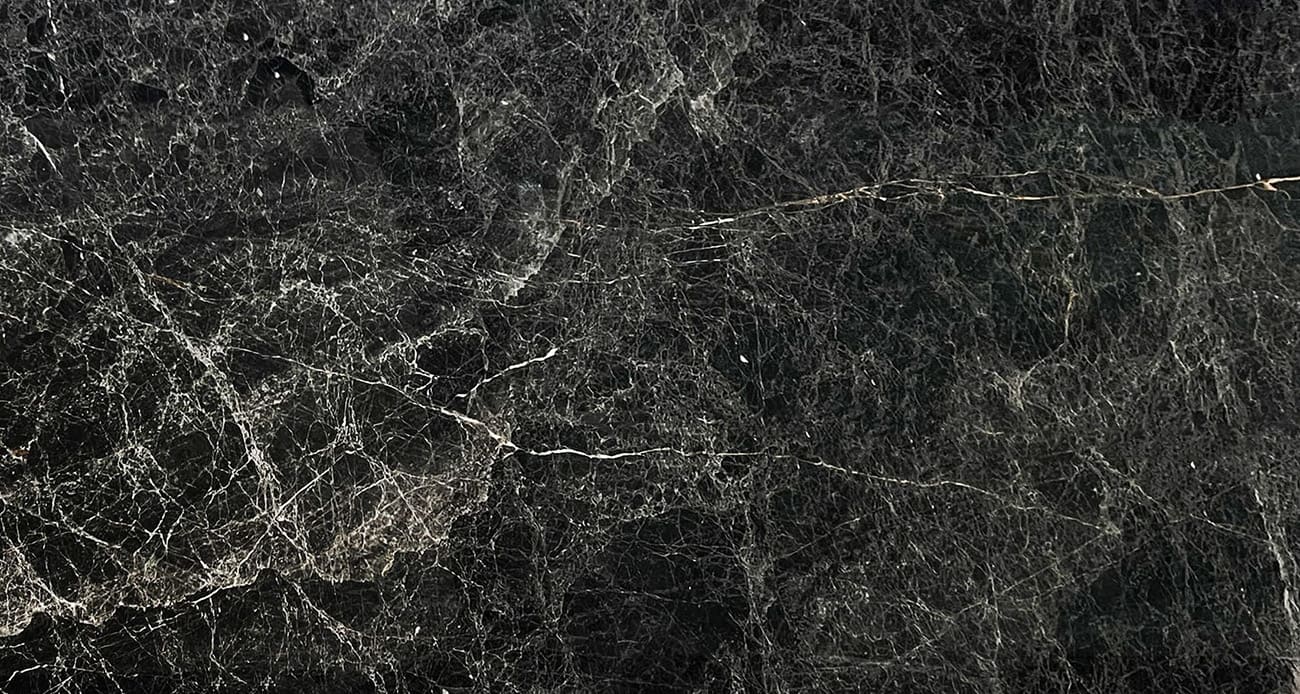
Image / A boldly veined stone at the entrance creates an immediate sense of character and refinement.
Q: Would you use more than one type of stone within the same space? If so, how do you determine the right balance?
A: Establishing a clear focal point is essential. Once the main feature wall has been defined, the patterns of the other stones should be more restrained. Their veining should also follow a consistent visual direction.
In simple terms, the space can have variety without ever feeling chaotic.