
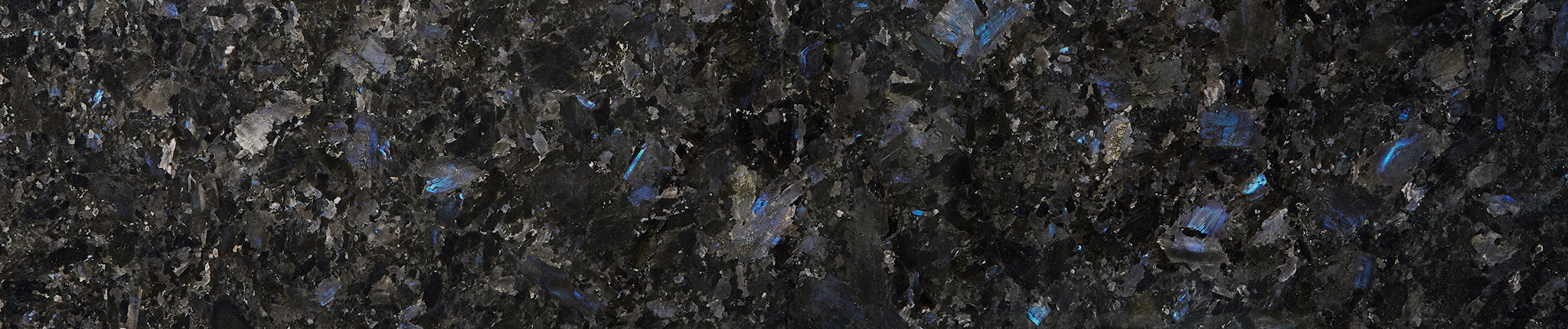

When daily culinary rituals begin to test the essence of hundred-million-year geological evolution
The answer to whether a stone belongs in the kitchen lies within its Mohs hardness.
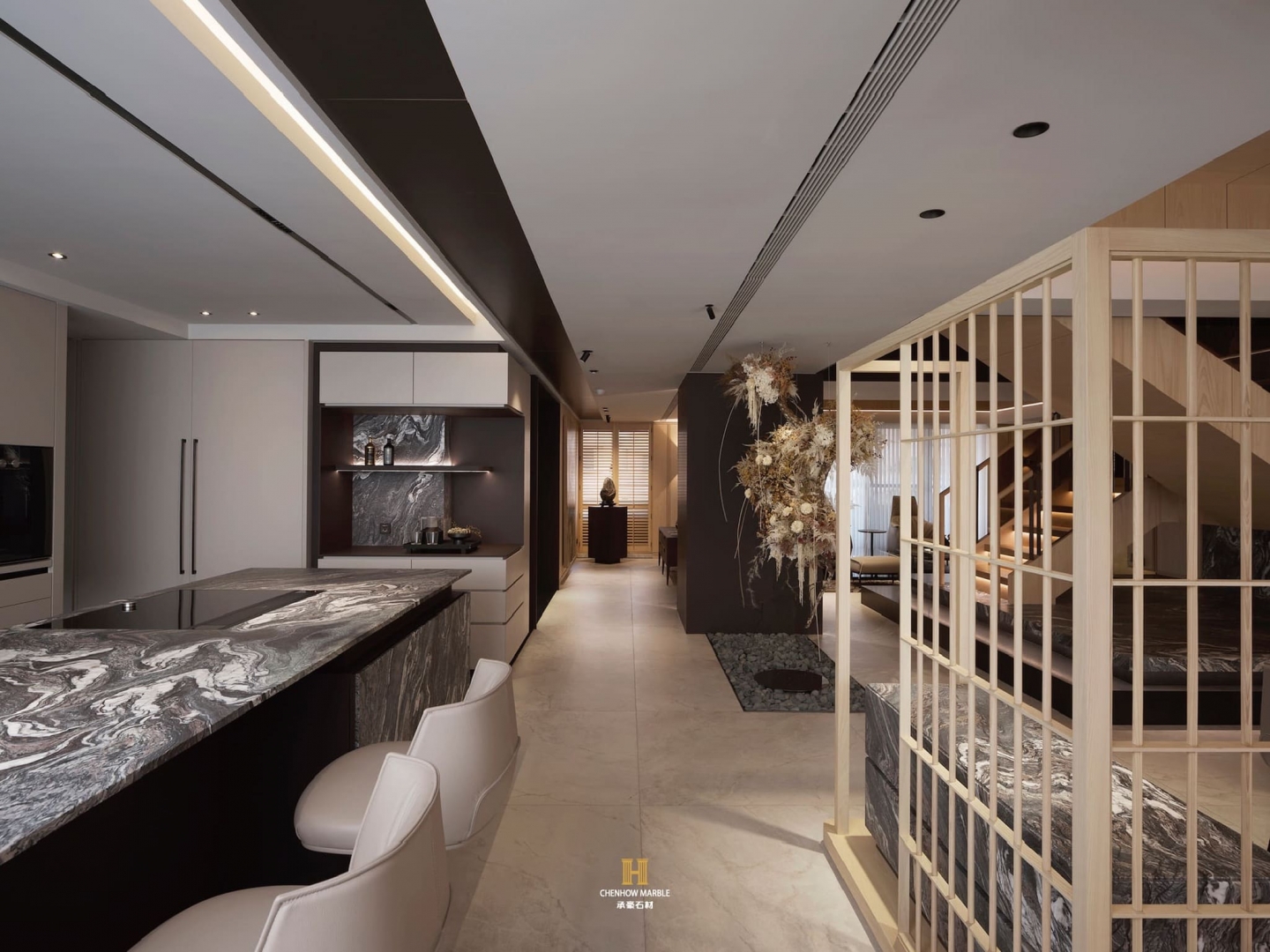
In modern luxury residences, the kitchen has long evolved beyond a mere space for meal preparation. As open-plan layouts, central islands, and social bars become spatial anchors, the kitchen transforms into the home's primary social hub—a gathering place where everyday moments, from coffee with family to wine with friends, naturally unfold.
Consequently, natural stone applications have expanded beyond feature living room walls, claiming center stage in the high-frequency living core: the kitchen.
Yet, when artistic expression extends into functional work surfaces, the true test begins. Friction from prep knives, direct contact with searing cookware, splashes of lemon juice and red wine, and the daily sliding of ceramic tableware continuously wear upon the stone's surface. This is precisely why certain natural stones acquire a richer patina over time, while others lose their luminous luster within mere months.
The deciding factor in this trial of time extends far beyond surface aesthetics—it rests upon physical properties known in material science as the Mohs Hardness Scale.
This metric directly governs a stone's capacity to withstand scratch, etch, and abrasion. Only natural stones engineered by nature to meet elite hardness thresholds allow their ancient geological movement to retain their original depth and luster amidst authentic daily living.
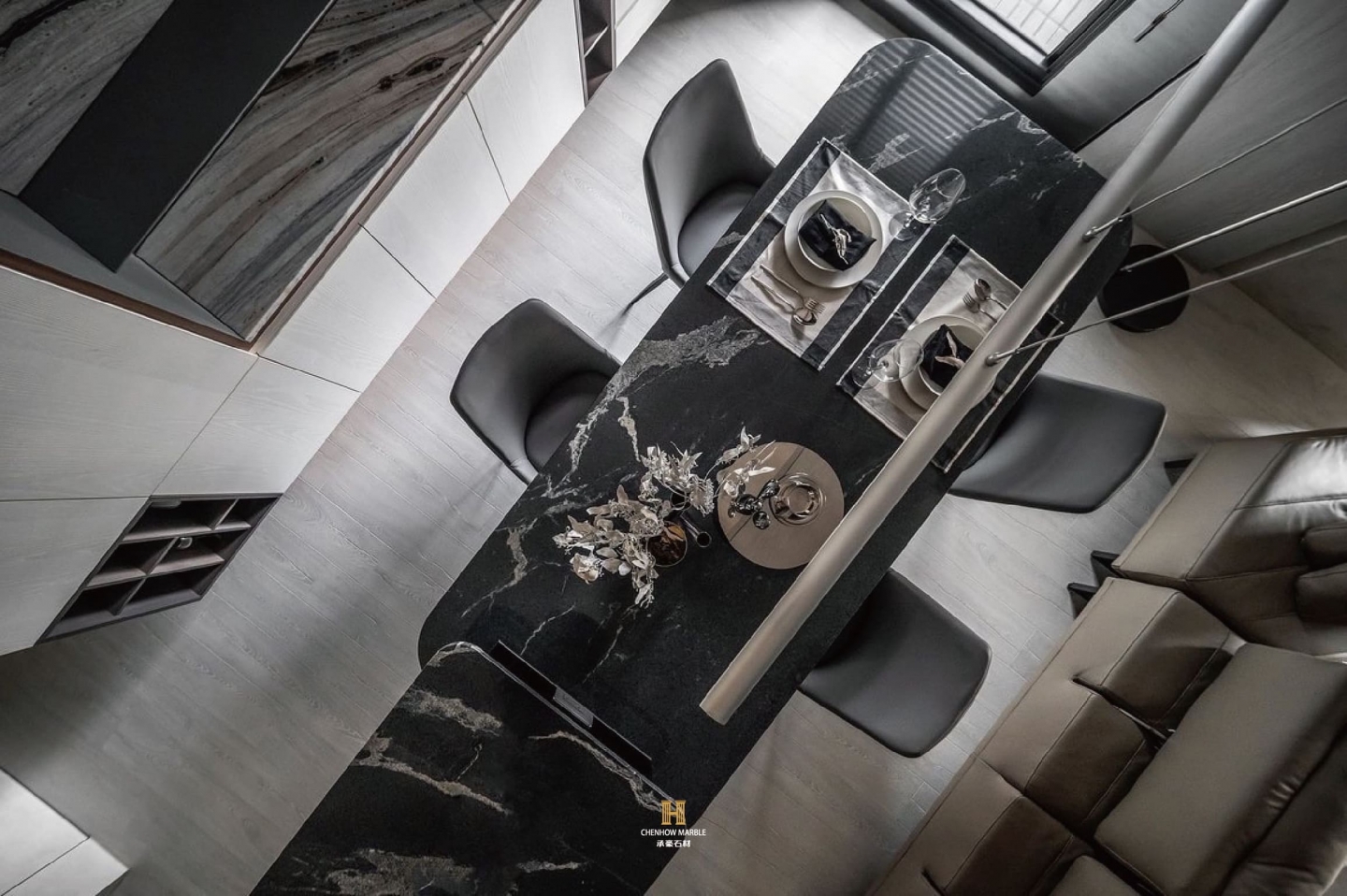
Will your kitchen countertops get scratched from daily use?
Understanding the Mohs Hardness Scale
The underlying principle of the Mohs Hardness Scale is straightforward: when two materials rub against each other, the harder material leaves an irreversible scratch on the softer surface. Rather than measuring a stone's weight or impact resistance, it evaluates its ability to resist surface abrasion from daily contact.
Graded from 1 to 10, a higher number indicates superior scratch resistance. Diamond, nature’s hardest substance, sits at 10, whereas calcite—the primary mineral component of beloved classic marbles—registers at a modest 3.
While seemingly a minor numerical distinction, within a high-use kitchen environment, the gap between 3 and 10 directly dictates spatial longevity and daily ownership experience.
To understand how materials perform, we examine the everyday "hardness duels" taking place across culinary surfaces:
Mohs Hardness Reference Chart
|
Mohs Scale |
Reference Mineral |
Everyday Comparative Items |
|
1 |
Talc |
Talcum powder |
|
2 |
Gypsum |
Fingernail (~2.5) |
|
3 |
Calcite |
Marble, copper coin |
|
4 |
Fluorite |
Softer natural stones |
|
5 |
Apatite |
Standard steel utility tools |
|
6 |
Orthoclase (Feldspar) |
Feldspar content in granite |
|
7 |
Quartz |
Quartz sand, ceramic tableware |
|
8 |
Topaz |
Gemstone topaz |
|
9 |
Corundum |
Sapphire, ruby |
|
10 |
Diamond |
Diamond ring |
What truly wears down the countertop isn't necessarily the kitchen knife in your hand.
Why Mohs Hardness 6 Serves as the Countertop Threshold
A critical truth emerges from material science: the everyday objects that come into contact with kitchen countertops predominantly fall into the high-hardness bracket of 5.5 to 7.
Stainless steel cutlery averages 5.5, tempered glass reaches 6.5, and ceramic dinnerware along with airborne quartz sand particles peak at 7. If a stone's hardness falls below these daily benchmarks, routine use will inevitably degrade its polished finish over time.
Fatal surface damage rarely stems from sudden impacts; it accumulates through subtle, intimate domestic habits. Placing dinner plates, repeated wiping, and sliding hot cookware multiple times a day leave their mark over months and years. Therefore, veteran interior architects regard Mohs Hardness 6 as the baseline threshold for kitchen stone selections. Crossing this line ensures that nature's fine veining remains unblemished over decades of authentic living.
Hardness Comparison of Common Kitchen Materials
|
Material / Everyday Object |
Mohs Hardness Rating |
|
Marble |
3~4 |
|
Stainless Steel Cutlery |
5.5 |
|
Granite |
6~7 |
|
Tempered Glass |
6.5 |
|
Natural Quartzite |
7 |
|
Ceramic Tableware |
7 |
|
Quartz Sand Particles |
7 |
The Case of Marble Islands
The Aesthetics vs. Utility Paradox
Marble is indisputably captivating. From ancient Roman architecture to modern high-fashion flagships, it defines luxury material design. However, visual refinement does not automatically translate to high-intensity functional resilience.
Many luxury homeowners discover over time that pristine, mirror-polished marble countertops begin to develop fine hairline scratches, lose their clarity, or suffer from stubborn dull spots. The issue rarely lies in stone quality, but rather in marble's inherent geological makeup:
【Hardness Constraints & Hairline Scratches】
Composed primarily of calcite, marble possesses a Mohs hardness of only 3 to 4. Stainless steel prep knives (5.5) and ceramic plates (7) easily abrade its surface. As these items slide across the counter, the polished mirror finish gradually breaks down into subtle scratching.
【Acid Sensitivity & Chemical Etching】
Rich in calcium carbonate, marble reacts quickly with acidic compounds. Everyday staples such as lemon juice, tomato sauces, vinegars, and red wine cause localized chemical etching if left on the surface. This structural alteration cannot be removed with standard cleaning—leaving permanent dull white hazing despite meticulous maintenance.
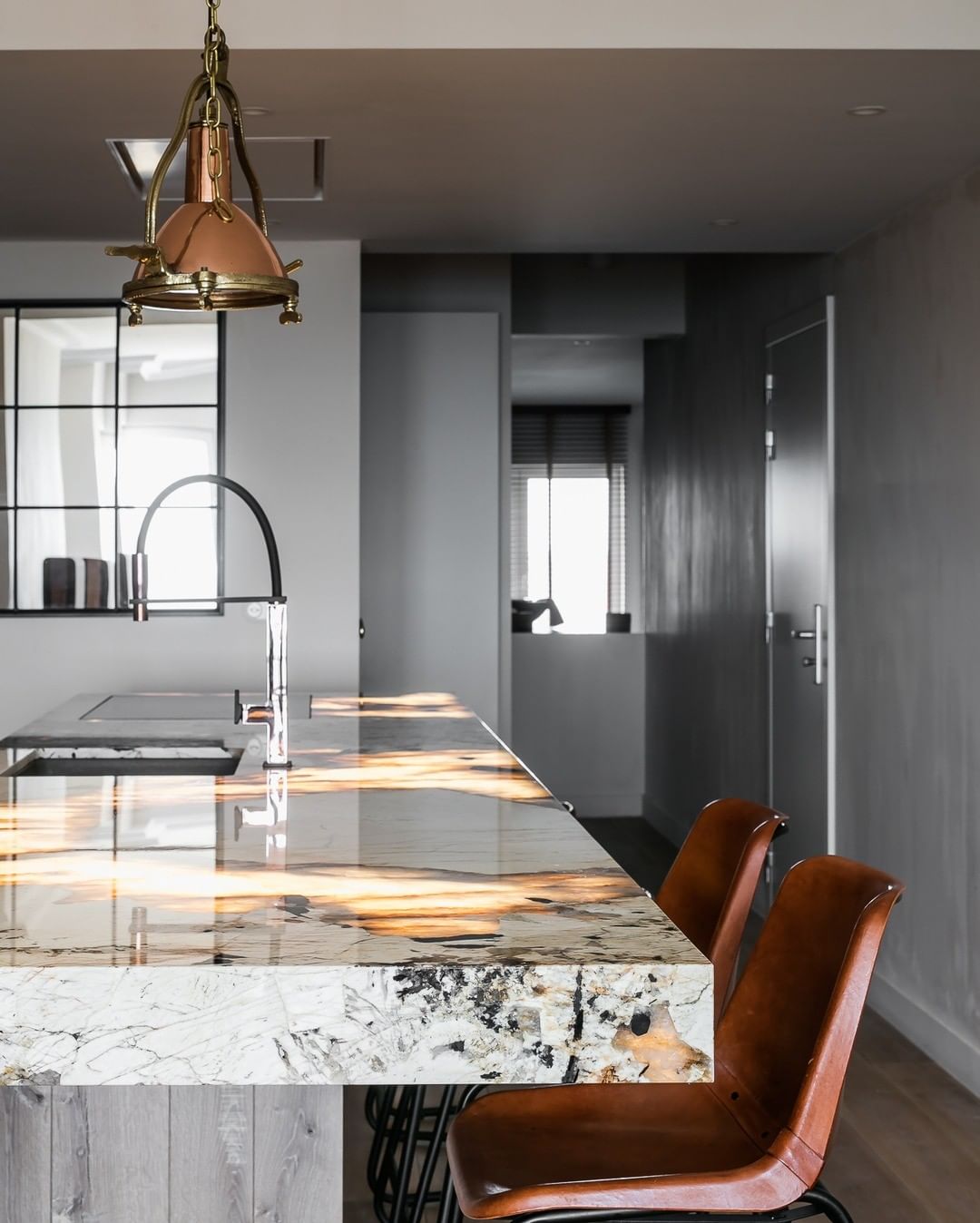
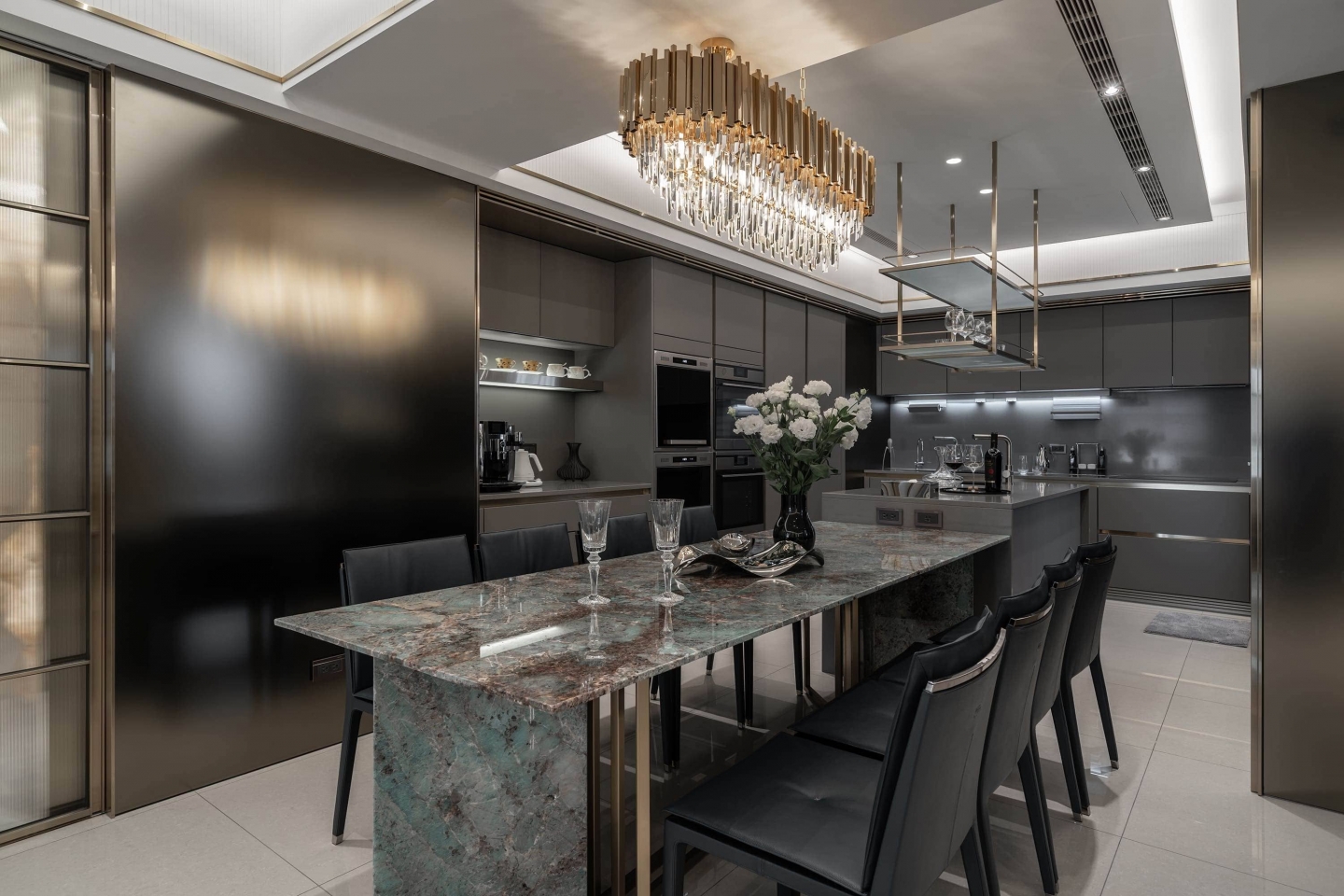
Chasing the raw movement of natural stone does not require compromising on utility
When Aesthetics Meet Function: Quartzite and Granite
The solution lies in selecting the correct geological classification. Among natural stones, Natural Quartzite and Natural Granite remain favored by luxury developers and design practices because they merge visual drama with unyielding physical durability.
【Natural Quartzite】Marble Aesthetics with Structural Resilience
Boasting a Mohs hardness of approximately 7, natural quartzite consists primarily of recrystallized quartz grains. Its hardness surpasses standard kitchen cutlery and glass. Crucially, quartzite escapes the heavy granular look of traditional granite, offering flowing veining, translucency, and rich color depth comparable to fine marble. Combining collector-grade artistry with superior wear resistance, quartzite stands as an irreplaceable material for active kitchens.
【Natural Granite】A Deep-Earth Classic
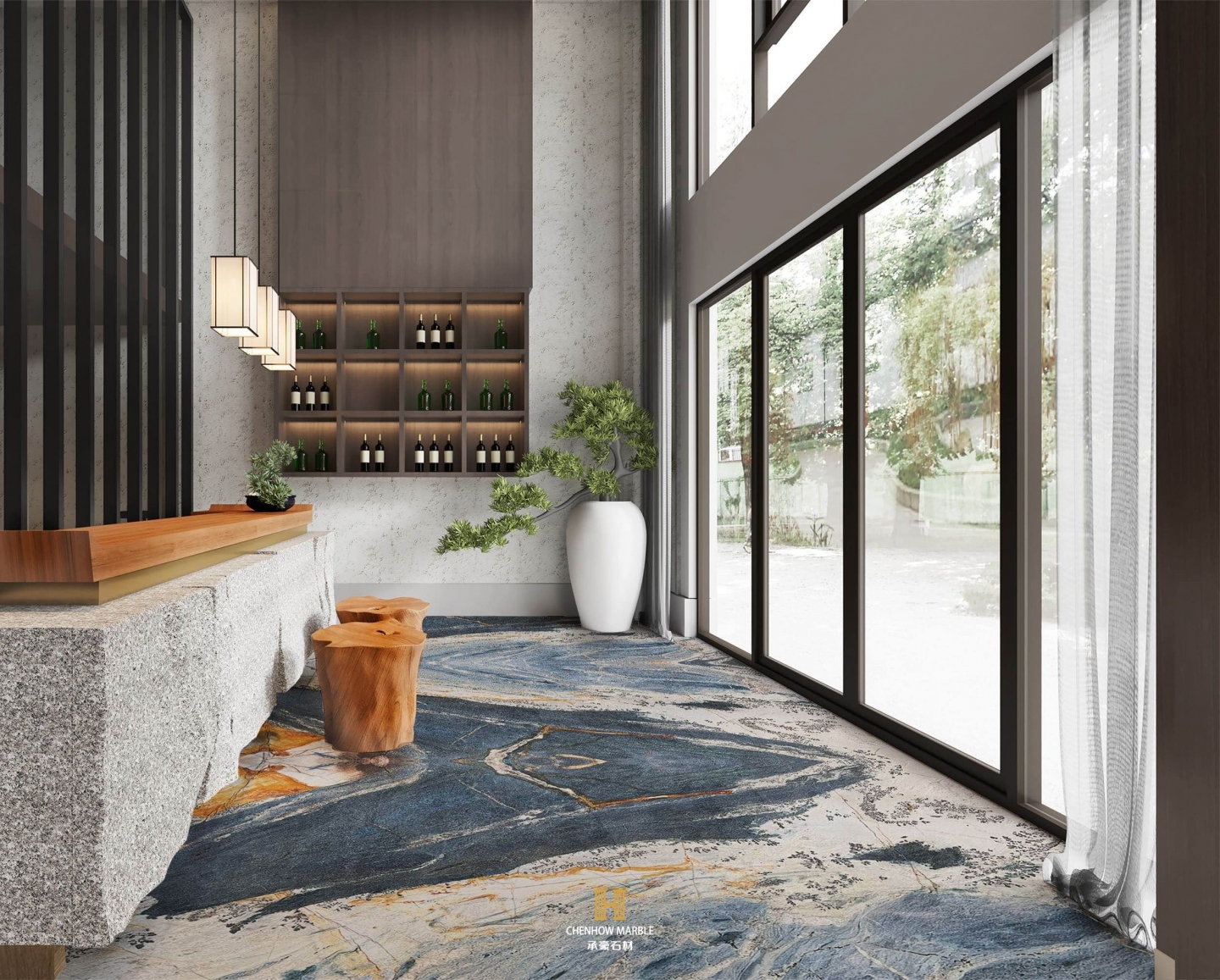
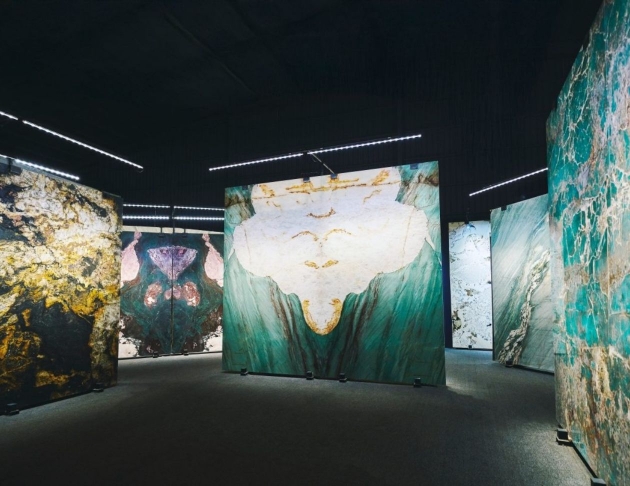
Ranging between 6 and 7 on the Mohs scale, natural granite is composed of fused quartz and feldspar, offering resistance to heat, abrasion, and daily wear. In high-frequency culinary zones, granite remains a dependable choice. Rare exotic granites sourced from Brazil—such as Mont Blanc, Angel Star, and Lanting Pavilion—shatter traditional perceptions of granular stone, presenting sweeping geological movement and crystalline depth as collector-grade luxury statement slabs.
Insights from CHENHOW MARBLE
Strategic Material Allocation
In CHENHOW MARBLE’s experience collaborating with top-tier interior architects, mature spatial design avoids applying a single stone universally. Instead, it places each material where its physical properties offer maximum value.
For active prep surfaces, wok stations, and sink surrounds where countertops face daily exposure to knives, thermal shock, and acidic seasonings, we recommend prioritizing Natural Quartzite or High-Hardness Granite. Their resilience forms a protective foundation for everyday living.
This does not mean abandoning marble's poetic elegance. Vertical island facades, backsplashes, and dry bar counters—zones free from high-abrasion wear—can be reserved for dramatic marbles or exotic luxury stones. When architectural lighting washes across these vertical natural crystals, the resulting depth of light and shadow creates an atmosphere that synthetic surfaces cannot replicate.
A stone's color and veining inspire immediate emotion, but its hidden physical properties dictate whether a space remains timeless. At CHENHOW MARBLE, every imported slab undergoes rigorous evaluation for hardness, water absorption, acid resistance, and site suitability—ensuring that true luxury endures long after installation, maintaining the same luster as the day you first fell in love with it.
✦ 【Click Here for Digital Stone Selection】to explore our collector-grade virtual gallery.
✦ 【Connect via LINE Official Account】to begin a personalized consultation with our luxury stone specialists!
-
Stone Knowledge The Art of Marble Maintenance — Two Fundamental Rules for Timeless Longevity -
Stone Knowledge What is Luxury Stone? A Guide to Selecting, Pricing, and Designing with Exotic Natural Slabs -
Stone Knowledge Searchome | Curation, Purchasing, and Maintenance of Luxury Marble for High-End Interiors -
Stone Knowledge Deciphering Natural Stone Costs and Valuation Factors for Luxury Interiors